
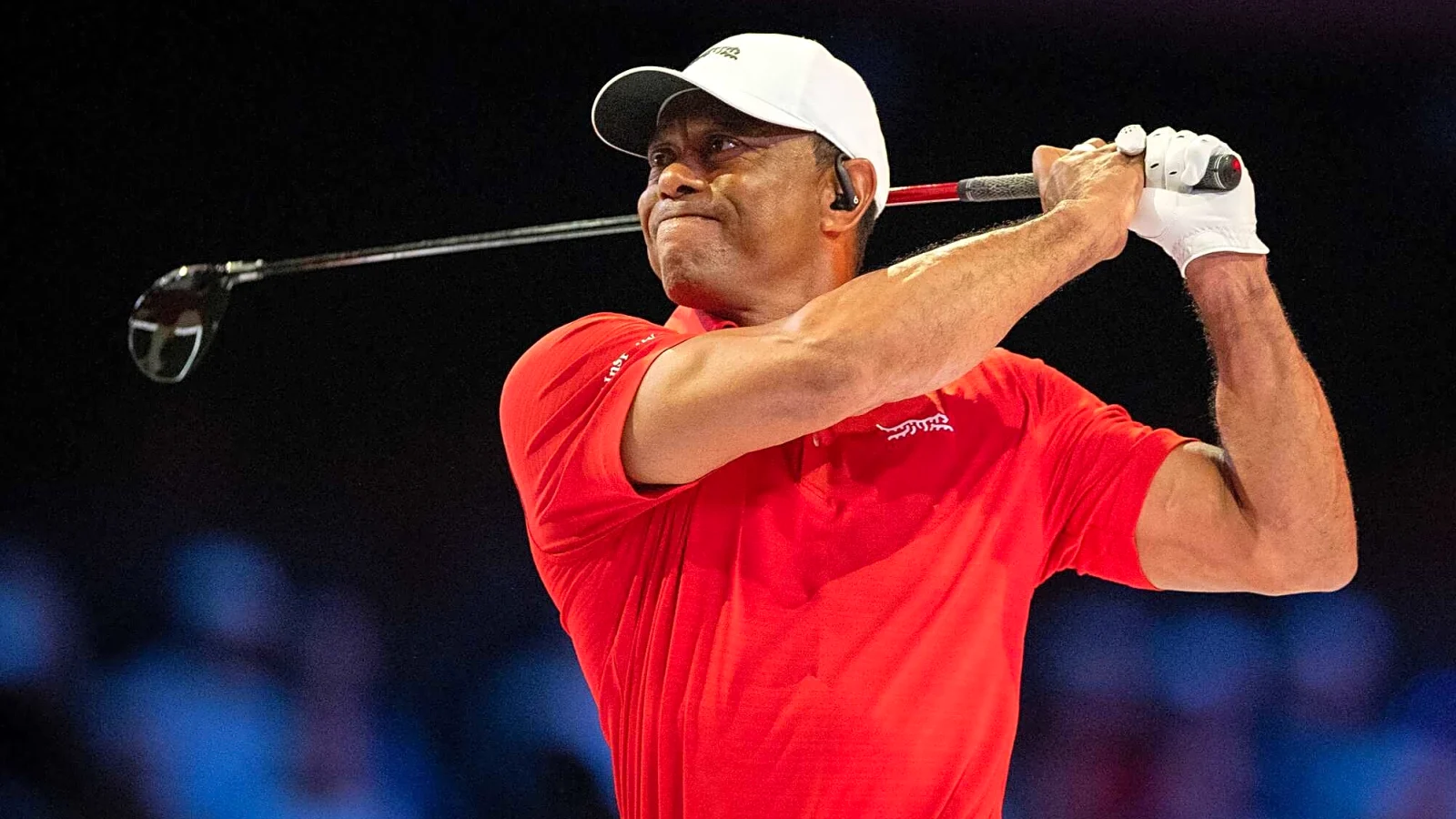
On a humid August evening in 1996 at the Greater Milwaukee Open, a skinny 20-year-old with a red Nike shirt and an almost unnerving calm stepped to a microphone and uttered three words that would echo for decades: “Hello, world.” Tiger Woods had just turned professional. Few in the room that day fully understood they were witnessing the beginning of the most transformative career in golf history.
Nearly three decades later, Woods stands as the only golfer of the modern era to sit at the intersection of athletic greatness, cultural phenomenon, and generational wealth. Fifteen major championships. Eighty-two PGA Tour victories (tied with Sam Snead for the all-time record). More than $120 million in official prize money. And a personal fortune that Forbes now places at approximately $1.5 billion.
The Professional Debut: 1996 and the Birth of a Phenomenon
Woods arrived on the PGA Tour with a résumé that already bordered on mythical. Three consecutive U.S. Amateur titles. A Stanford education. A father, Earl Woods, who had openly predicted his son would change the world. When he made his professional debut at the Greater Milwaukee Open, he finished tied for 60th. Two months later he won the Las Vegas Invitational in a playoff. A week after that he captured the Walt Disney World/Oldsmobile Classic. The kid was already winning.
In April 1997, just eight months into his professional career, Woods dismantled Augusta National. He won the Masters by 12 strokes — still the largest margin in tournament history — and became the youngest champion at age 21. The victory was more than a tournament win. It announced that the old order of golf had been permanently disrupted.
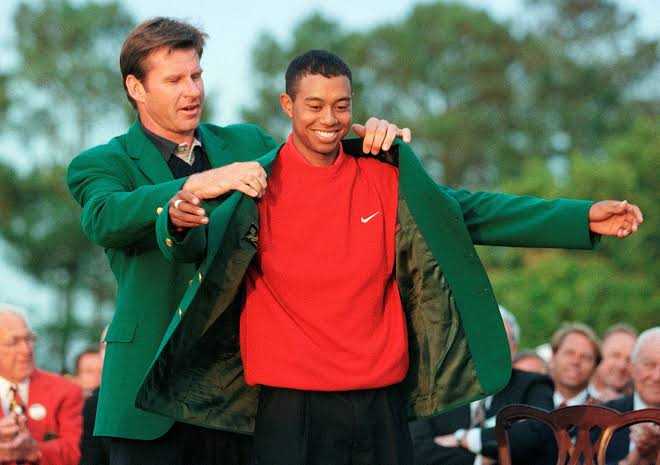
Woods celebrates his record-breaking 12-stroke victory at the 1997 Masters, the first of five Green Jackets. (Placeholder image)
The Peak: Tiger Slam and Total Domination
Between 1999 and 2008, Woods produced a stretch of excellence that most historians rank among the greatest in any sport. In 2000 he won nine times on the PGA Tour, including three majors. The following spring he completed the “Tiger Slam” — holding all four professional major titles simultaneously after winning the 2001 Masters. No player before or since has matched the feat.
His 15 major titles place him second only to Jack Nicklaus’s 18. His 82 PGA Tour wins remain tied for the most in history. At his absolute peak, Woods was not merely the best player; he was the gravitational center of the entire sport. Television ratings, tournament purses, and global interest in golf all rose with him.
Career Snapshot
The Long Road Back: Injuries, Absences, and the 2019 Masters
What makes Woods’s career singular is not only the peaks but the depth of the valleys he climbed out of. The first major physical setback came in 2008. After winning the U.S. Open at Torrey Pines on a broken leg and torn ACL, Woods underwent reconstructive knee surgery and missed the rest of the season. He returned, but the body that had once seemed invincible began to betray him with increasing frequency.
Back problems emerged in the early 2010s. Multiple microdiscectomies followed. In 2017 he underwent spinal fusion surgery. At various points between 2014 and 2017, many observers quietly concluded that his competitive career was over. Woods himself admitted he had days when simply getting out of bed was a victory.
Then came April 2019. At age 43, Woods won his fifth Masters and 15th major championship. The scenes around the 18th green — Woods embracing his children, the roar that seemed to shake the Georgia pines — remain among the most emotional moments in modern sports history. It was not just a comeback. It was a cultural event.
The physical toll continued. A serious single-vehicle rollover accident in February 2021 left Woods with multiple leg fractures and required extensive surgery. He has played only sparingly since, carefully selecting events. In recent years additional procedures, including disc replacement surgery, have further limited his schedule. As of mid-2026, Woods has stepped back from competitive golf for an extended period to focus on recovery and personal well-being. He has not entered any of the 2026 major championships.
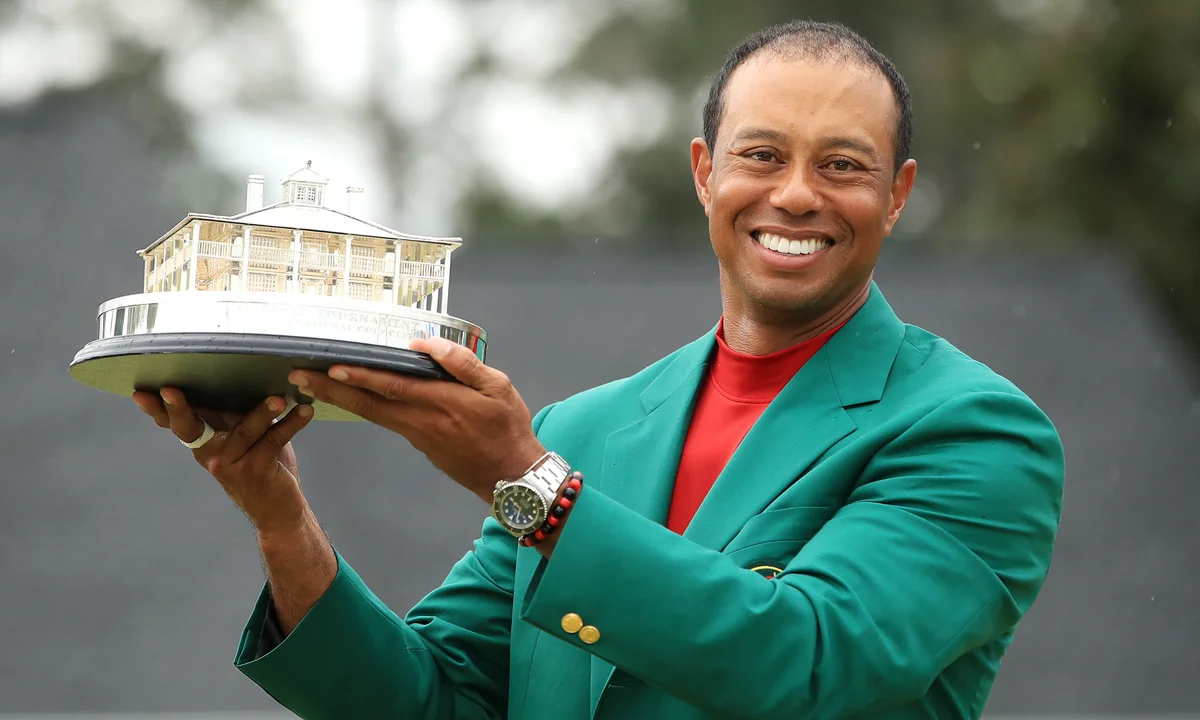
The 2019 Masters victory — widely regarded as one of the greatest comebacks in sports history. (Placeholder image)
The Business of Being Tiger: Building a $1.5 Billion Empire
While the on-course record is extraordinary, Woods’s financial story is equally remarkable. According to Forbes, his net worth stands at approximately $1.5 billion as of 2026, making him the wealthiest golfer in history and one of only a handful of active or recently active athletes to reach billionaire status.
Official PGA Tour prize money accounts for only a fraction of that total. The real engine has been endorsements, equity stakes, and entrepreneurial ventures. Early Nike contracts set records for athlete deals. Later partnerships with Rolex, Bridgestone, and others sustained the off-course income even as his playing schedule diminished. In recent years his Sun Day Red apparel brand and ownership interest in TGL (The Golf League) have added significant new value.
Career pretax earnings are estimated near $2 billion when endorsements and business interests are included. Woods has repeatedly demonstrated that the most durable asset in sports is not a swing — it is a name that still moves product and captures attention three decades after he first said “Hello, world.”
What Remains
Tiger Woods never formally retired. He has simply been forced, by body and circumstance, into a different relationship with the game that made him famous. At 50 years old he is eligible for the PGA Tour Champions, though any return remains uncertain.
What is certain is the scale of his imprint. He expanded the audience for golf across racial and demographic lines. He raised the physical and mental standard for what elite competition looks like. He showed that greatness can be interrupted by injury, scandal, and time — and still reassert itself in the most dramatic fashion imaginable.
The 15 majors will always stand second to Nicklaus. The 82 wins will always share the record with Snead. But the combination of dominance, cultural reach, commercial power, and sheer resilience belongs to Woods alone. In the long history of the sport, there has never been another player quite like him. There may never be.
James Harrington has covered professional golf for more than two decades. He is based in Florida.